This is a letter submitted to the editor of the Mountain Democrat. 'nuf said.
Dear Editor,
As a family doctor serving our community for the past 13 years, I want people to be aware that doctors who see MediCare and TriCare patients (the disabled, the elderly and the military and their families) face a 30% reduction in payment for their care to be phased in on December 1 and January 1.
To be clear, this is not related to recent health care reform legislation but rather to a payment method that MediCare has been using for years now called the Sustainable Growth Rate. This is supposed to reign in spending by MediCare (and TriCare, which is linked to it) by scaling payment to doctors based on local population and cost of running a business. This has typically been deferred at the last minute by Congress in order to avoid cuts to doctors and their patients.
Unfortunately, the currently convened "lame duck" session must act now to defer these cuts and hopefully to devise a better system of payment. If they do not, every doctor who sees disabled, older or military patients faces a loss of 30% in professional services given in service to these patients.
Speaking for myself, I do not plan to stop seeing patients with these insurances because I feel it is a duty and responsibility of doctors to see these patients who have given so much to our community. However, such large reductions in payment would certainly affect how many patients with these insurances I could see and would certainly have a stifling effect on the ability of elderly and military patients to find medical care.
If this concerns you, please urgently contact Senators Boxer and Feinstein to urge them to act now!
Yours truly,
Mark Tong, MD
Office of U.S. Senator Barbara Boxer
501 I Street, Suite 7-600
Sacramento, CA 95814
(916) 448-2787
(202) 228-3865 fax
Office of U.S. Senator Dianne Feinstein
One Post Street, Suite 2450
San Francisco, CA 94104
Phone: (415) 393-0707
Fax: (415) 393-0710
Wednesday, November 17, 2010


Tuesday, November 16, 2010
A Word on Whole-Body Scans (this time in airports)
 I find it ironic at just the time that renewed concern is being expressed by both doctors and patients about radiation exposure in medical tests such as CT's and heart scans, we are evidently willing to accept what amounts to radiation exposure with unknown health risks in the interests of a virtual strip search to get on a plane. Given the way that medicines and tests often only reveal side-effects after widespread use, I hope that we don't see a rash of "problems" in pilots, flight crews and business travelers in the intermediate future.
I must say, I do find myself in agreement with Captain Smith that our response to the terrorist actions between 1985-89 was much more calm, determined and measured and less self-defeating.
Monday, October 11, 2010
Favorite Doctors of 2010
Hey, I'm very honored!
Thanks to everyone who voted for me in the Foothills Style magazine as among our communities favorite doctors. My staff and I do everything we can to give you excellent medical care and service, and look forward to continuing to do so for the future!
Thanks to everyone who voted for me in the Foothills Style magazine as among our communities favorite doctors. My staff and I do everything we can to give you excellent medical care and service, and look forward to continuing to do so for the future!
Friday, September 24, 2010
"How Doctors Think"- a good book
 I recently finished reading this book after a really interesting discussion with some friends-of-friends who happened to work in publishing and in clinical psychology.
It was quite the best seller when it was first published in 2007, and was discussed as a book written by a doctor to a target audience of laypersons with the intent of helping to understand how their doctors may think, and thereby how to get the most out of their appointments.
Certainly it is that, but is worthwhile for anyone to read and particularly for doctors.
Dr. Groopman is systematically examining the way in which doctors are trained and practice. He is also looking at how some specific specialties (such as primary care, surgery and radiology) may be prone to certain types of predictable errors due to their training or practice settings.
The book is not an indictment of medical error, but rather a study in technical and human limitation with suggestions for recognizing and remedying such problems.
It is therefore a fascinating book for the patient and family, but should offer reflection and self-inspection for any doctor.
Tuesday, September 7, 2010
Back to School Special: A Different Way to Rank the Best Schools
 We've all seen the U.S. News and World Report annual ranking of top schools since it was first published in 1983. Many students and parents avidly look to see where their university, college, or graduate school falls within the top 100.
It's worth noting that the rankings are based largely on entrance examination scores, amount of funding received for research, and the subjective impression by educators of the overall prestige of the institution.
There has been real interest in looking at the ranking of schools in a different way which is based more on desired outcomes.
For instance, what if the focus was more on how well institutions of higher learning fulfilled their stated missions to graduate enrolled students, prepare them for further education or social service, and to attract and maintain high caliber faculty as well as to do research?
The Washington Monthly did exactly such a ranking which examined research funding, but also successful graduation rates, transition to graduate study, involvement of Pell grants, ROTC and Peace Corps and also the membership of faculty in national academies as recipients of significant awards.
Some rankings based on these criteria are not surprising; Stanford is highly ranked at #4, though really Stanford has always claimed to be serious in the societal aspects of its mission statement.
On the other hand, Harvard placed a lowly #9, while UC San Diego was #1! Not only did UCSD spend more on research than Harvard, but UCSD also surpassed Harvard in successfully graduating students, and in student community service. (Disclosure: my alma mater UC Davis was #6).
A recent study published in the Annals of Internal Medicine similarly looked at the ranking of medical schools in a different light. Rather than ranking med schools based on MCAT scores and what percentage of applicants were turned down, this study ranks by the number of graduates who go on to practice primary care medicine, and particularly under-represented minority graduates and practice in rural or under-served parts of the country. The assumption being made here is that the ultimate goal of a medical school is to produce doctors who will be of the most benefit to the health of our country.
Interestingly, the rankings based on these criteria are nearly opposite the classic rankings based on elite status.
I guess the implication of both these rankings is that students, their families and also the populace in general and our government should consider thinking differently about how we think of our institutions of higher learning and how we want to act on this.
Tuesday, August 31, 2010
A Wonky Look at the Development of U.S. Obesity
 We've all heard that obesity in our country is virtually pandemic. Indeed, 70% of the adult population is clinically overweight or frankly obese as defined by calculation of body mass index (BMI) which looks at your weight in relationship to your height.
This study looks at obesity since the mid-1800's and how it develops in the same people over time.
The conclusion is that the development of present levels of obesity did not just suddenly develop in the late 1980's, but rather has developed more slowly and steadily throughout the entire 20th century.
As this study points out,
The lifestyle changes of the 20th century affected the four groups under study somewhat differently. Identifying the deep causes of the long-run trends is outside of the scope of this study, but the “creeping” nature of the epidemic, as well as its persistence, does suggest that its roots are embedded deep in the social fabric and are nourished by a network of disparate slowly changing sources as the 20th-century US population responded to a vast array of irresistible and impersonal socio-economic and technological forces.
The most obviously persistent among these were:
These elements – taken together – virtually defined American society in the 20th century.
- the major labour-saving technological changes of the 20th century,
- the industrial processing of food and with it the spread of fast-food eateries (To illustrate the spread of fast food culture, consider that White Castle, the first drive-in restaurant, was founded in 1921. McDonald started operation in the late 1940s, Kentucky Fried Chicken in 1952, Burger King in 1954, Pizza Hut in 1958, Taco Bell in 1962, and Subway in 1962.),
- the associated culture of consumption,
- the rise of an automobile-based way of life,
- the introduction of radio and television broadcasting,
- the increasing participation of women in the work force, and
- the IT revolution.
Monday, August 30, 2010
Health Care Reform Should Not Write Off Small Medical Practices
 While I've generally been of an optimistic wait-and-see approach to the recently enacted health care reform legislation, I have been concerned to note that a fair amount of it seems optimized to large medical organizations.
For example, the billions to be spent to create incentives for doctors to use electronic medical records (EMR) does nothing to require uniform code standards so that various EMR products would still be able to communicate and share data with each other. I hesitate to spend up to $40,000 in start-up costs alone, only to find that my EMR system can't share data with other offices or hospitals.
Also, the use of medical practice data for statistics gathering is not useful in small office practices because of the smaller number of patients. This really presupposes medical groups with tens of thousands of patients like Kaiser or the VA.
This article reports on a meeting with two White House officials basically stating that doctors should get ready to enjoy a life in Big Medicine. Frankly, if I enjoyed working for Kaiser or the VA, I'd already be doing that.
I do find it unfortunate that the present administration's approach to stimulating businesses and propping up banks similarly seems to almost solely be directed to enterprise-scale businesses and large banks and not the small "mom and pop" businesses and local credit unions.
As far as I'm concerned, entrepreneurship is what makes America great!
Thursday, August 26, 2010
ALERT: Billing Issue with Marshall Lab
 If you are a MediCare or MediCal patient, you have already noticed that Marshall Lab has been using computer software that can generate a paper for you to sign anytime you come in with a test ordered where MediCare has a possible restriction on how often they can be done. I posted on this on 11/30/09, as patients were becoming concerned about being billed for tests that were ordered by their doctor.
Evidently, a problem has arisen where you sign this paperwork even though MediCare should be covering the test. This should be OK, because all the form states is that you are aware that you MAY (not will or shall) be billed. However, MediCare seems to be taking this as blanket acceptance for them to refuse to pay on the tests.
This is not at all how this is supposed to work. We have been in touch with Chris, who is a woman who does billing for Marshall. She is advising patients not to pay in these situations, and is re-billing MediCare. She has given us permission to give out her name and also her phone number to use in case you are in this predicament.
Her number is 626-2770, ext. 2588#.
Tuesday, August 24, 2010
A Really Interesting Letter on the End of Life
 Some of you may remember Marty Welsh; he was a family practice doc here, but retired a few years ago after he was diagnosed with ALS (otherwise known as Lou Gehrig's disease).
This was a real tragedy as this is known to be a slowly progressive, debilitating and ultimately fatal and untreatable illness, and also because Marty is a fantastic guy and a model doctor.
About a year ago, he wrote a letter to the opinion pages of the LA Times which is his hometown paper. This letter has been very widely read, posted and cited. It is a very clear and heartfelt letter written my a person dying of ALS, and also from the point of view of a doctor who is now a patient who knows what will happen to himself over the course of the illness.
Sorry it's taken a while to link to it, but better late than never. It's certainly a worthwhile reflection on the meaning of quality of life.
Saturday, July 17, 2010
Weight Loss Apps

For those of you with both a desire to lose weight and a smartphone, here is some interesting information on useful (and often free!) apps for weight loss.
Personally, I use Lose It!, as I find it simple and fun to use to track calorie intake as well as energy expenditure against a daily budget for weight management.
Colon Cancer Screening
 Colon cancer screening is something I used to have to bring up at annual physicals, but ever since Katie Couric ran video from her own colonoscopy on her morning show in 2000 there has been increasing acceptance of colon cancer screening as a do-able and worthwhile preventive measure.
For most people, colon cancer screening should start at 50 years of age since colon cancer before this age is very uncommon. Certainly, if you have a history in your family of colon cancer or other high-risk conditions you should consider starting screening at 5-10 years prior to the age of cancer diagnosis in your relatives.
For people at higher risk to have colon cancer (such as family history of colon cancer, personal history of Crohn's disease), colonoscopy is a good choice of screening test. This allows a doctor to visually inspect the inside of your colon, and biopsy any abnormal lesions to determine whether they are at risk to become cancers and to determine the frequency of interval screening colonoscopies.
For most people, the are a number of different tests that could be chosen for screening. While Ms. Couric's educational efforts spurred people to ask about screening, it also seems to have led many people to assume that colonoscopy is the best or even the only good screening test. This is not correct.
Admittedly, out of all the tests that require bowel prep (a regimen of laxatives that cleanses out the colon for inspection) colonoscopy is the only one that inspects the entire colon and in which biopsy can be performed at the same time on any polyps or lesions that may be seen.
However, most polyps seen are benign, or only have a 3-5% chance of possibly becoming cancerous over the following 5-10 years necessitating repeat colonoscopies for surveillance.
This would be great if colonoscopy was proved to find cancers early enough to save lives. However, it has not.
In fact, only one type of test has actually been shown to reduce the actual number of yearly deaths from colon cancer. This test involves test for blood in your bowel movements. If done annually, and if a positive test result (blood shown in bowel movement) is followed by colonoscopy this type of screening has been shown repeatedly over the years to be the only screening method that actually reduces the risk of dying of colon cancer as the cause of death.
Such tests used to require three separate specimens and used a chemical that would turn blue in contact with iron. Since iron is in hemoglobin which is what red blood cells use to carry oxygen, this test could be an indicator of bleeding from a very small, early colon cancer. Unfortunately, due to the nature of the test a positive result could come from rare meat, dental work or taking aspirin.
A more recent test now in use is superior and widely available and covered by insurances. This test is called FIT (fecal immunochemical test) uses antibodies that link only to human hemoglobin that has not been exposed to stomach acids. Thus, the test is both more accurate and less apt to cause false alarms. Also, it does not require any change in diet or medications, only needs one specimen and the specimen can be mailed back to the lab.
This newer test is so sensitive that it has been found to detect colon cancers over two years before a colonoscopy would find them, even in people at high risk for colon cancer.
Certainly, if I am seeing you for a physical and you are quite convinced that you need a colonoscopy for screening I will be happy to refer you to a good specialist for this. However, in most cases I recommend the FIT test annually as my preference is for the only life-saving test we have to offer.
Thursday, June 17, 2010
Sorry, but we have no choice but to limit taking new MediCare and TriCARE patients
 It shocks and saddens me to see that Senate Republicans have successfully blocked passage of a bill that would have prevented a cut by 21% in the reimbursement that doctors receive for seeing seniors and the military. This is apparently all in the name of not adding to the federal deficit at a time when seniors and the military are among the hardest hit in the present state of the economy, and when many feel that the payments from these insurances are already barely adequate for the complexity of care rendered.
I have freely seen patients with MediCare and TriCARE since I was a medical student, and I have always considered it an honor to serve my community, my country and my profession by treating our seniors, active duty and former military service members and their families.
However, I also have staff to pay, a mortgage and a child to put through college.
It is with the deepest regret that I will have to limit the number of new patients with these insurances that I can accept. Certainly, I will happily continue to care for my present patients with these insurances or as they become eligible for them by "growing into them".
These links to MedScape/WebMD and the Senior Journal provide more information on this issue.
With all love and respect,
Mark L. Tong, MD
UPDATE:
Apparently, the Senate has put of MediCare and TriCARE cuts for 6 months. I certainly hope they use the time to come up with a better solution than the present one. The House is expected to pass this on Monday. Yeah.
Should I get the shingles vaccine?
 Short answer: Sure- why not?
Shingles is a reactivation of chicken pox virus. When you get chicken pox as a child, you get over the pox illness. However, the virus remains dormant in your nervous system. For some reason, it can flare up in later adulthood.
The shot is one shot for life, and is recommended at over 60 years of age.
It is a live, attenuated virus which means that you should not take it if you have a condition that impairs your immune system such as AIDS, leukemia, lymphoma or bone marrow cancer. Also, you should not take it if you are on medication that suppresses your immune system such as chemotherapy or organ transplant medications.
Mind you, the vaccine probably prevents shingles about 70% of the time. However, it's probably still worthwhile since it's likely that if you get shingles even though you got the shot the outbreak will be much milder than it otherwise would have been.
Got to this link, if you'd like an explanation for why doctor offices don't give this vaccine.
Monday, May 24, 2010
Sexual Intercourse After a Heart Attack
 Evidently, this is an issue that often goes unaddressed with patients (not by me, I think).
Patients who have had a heart attack are usually and rightly concerned about what they can safely do, and how hard they can push their own bodies without harm. Their partners and family may be equally concerned about whether physical activity including sexual intercourse could be dangerous or harmful.
For most patients, sexual activity is perfectly safe within the few weeks after going home from the hospital assuming you feel generally up to it.
This frequently asked question list is helpful and reasonably specific, and notes that sexual activity (in terms of demand on your heart) is moderate and falls in between showering and gardening in terms of metabolic demand.
[Do note that if you use medication for erectile dysfunction (Viagra, Levitra, Cialis) you should not use them with nitroglycerin- containing heart medications (such as Imdur, IsMo, sub-lingual nitroglycerin) because sudden decreases in your blood pressure could result.]
Thursday, May 20, 2010
Allergies
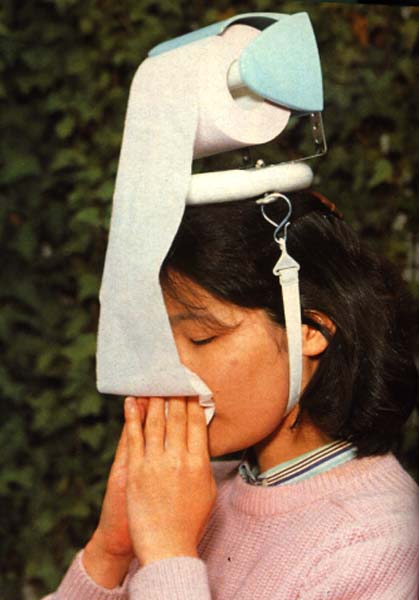 'Tis the season!
If the last few weeks of yellow-green pollen on everything has also been marked by itchy watery eyes, itchy runny nose and sneezing then you are very likely allergic to it. This is often referred to as "hay fever" and is technically known as seasonal allergic rhinitis.
If you notice this all year 'round, you may also be allergic to other things such as molds, dusts or animal danders.
Happily, there are a lot of things you can do to improve your symptoms.
First, try to avoid pollens by wearing a mask for mowing or brush clearing. Wash your face and hands when you're done. Try to sleep with the windows closed.
Over the counter medicines can be very helpful .
Anti-histamines such as Benadryl, Zyrtec and Claritin help by blocking the effects of histamine released in the allergic reaction. Remember, the more it works for allergy, the more potential there is for drowsiness. You may have to try different ones to strike the best and safest balance.
Decongestants such as Coracedin and Sudafed can help but can also raise your blood pressure. If you already have high blood pressure or take medication for that you should at least check your blood pressure after taking decongestants. If it's higher than your usual, you probably should avoid these.
Be careful of decongestant nose sprays such as Afrin and Neo-Synephrine. They are very effective, but addictive if used for over 3-5 days in a row.
Prescription nose sprays such as Flonase and Nasonex are easy to use, well tolerated and the single most effective kind of medication for relieving symptoms. If you are using them, remember that they have to be taken every day in order to prevent allergy symptoms.
Hopefully, this will help relieve the bothersome symptoms of hay fever for the season. If not, let us know so we can work on this with you.
Tuesday, May 18, 2010
Chicken Pox outbreak
We are seeing chicken pox within the last week or two here in El Dorado county, as also noted in the Friday 5/14/10 Mountain Democrat (sorry, their website is subscription only).
This is a common viral illness that generally shows up as a mild illness with feeling generally ill, itching, and fever up to 102 degrees for up to 2-3 days. More severe disease can result in pneumonia or other complications.
People at moderately higher risk of more severe disease includes:
This is a common viral illness that generally shows up as a mild illness with feeling generally ill, itching, and fever up to 102 degrees for up to 2-3 days. More severe disease can result in pneumonia or other complications.
People at moderately higher risk of more severe disease includes:
- people 13 years old or older
- people with chronic skin disease such as eczema or psoriasis
- chronic lung disease
- patients who take steroids chronically as inhalers or pills
Folks at higher risk of severe disease include:
- newborns
- pregnant women
- patients on steroid pills daily
- patients with supressed immune systems (HIV/AIDS, chemotherapy, organ transplant medicines)
Mind you, if you've already had chicken pox before you are extremely unlikely to get it again.
For the most part, the illness is treated supportively with soothing compresses, rest and over the counter medicines such as Tylenol. It generally goes away in a week or two. As it can easily spread through touching pox lesions and/or coughing or sneezing we generally recommend staying at home and avoiding school or work or social gatherings until the pox lesions have scabbed and the scabs have come off and there is no more coughing or sneezing. It is not necessary to see us in the office for this, as risk of spread to other patients is high.
Certainly, feel free to call if you are concerned about more severe illness or risk for severe illness.
The chicken pox vaccine has, over the past decade or more, been a routine part of childhood vaccinations and is generally given at 15-18 months of age. More recently, a second dose has been recommended for better vaccine response. Please contact the county department of public health about this if you feel you may need a second vaccine.
Wednesday, May 12, 2010
High Deductible Health Insurance Plans
 The impact of the recession on our local economy has been severe, especially considering the number of folks who have been affected by the loss of jobs in construction,and the number of state employees affected by furlough programs.
I think one of the tough choices folks are having to make is in choosing health plans that are lower in monthly premiums, but leave a lot of out-of-pocket costs to the patient in terms of annual deductibles, coverage only of generic medicines and/or coverage only of preventive care (or everything but - such as only ER and hospitalizations).
These high-deductible plans (so called "crash and burn" or catastrophic coverage plans) are attractive insofar as the monthly cost in premiums is lower or at least manageable.
The problem is that these plans were never really geared for families or for patients over about 30- 35 years old. These plans have been around for quite a while, but the target market was always young healthy employees just out of school and off their parents' insurance who rarely got sick and would typically just need annual Pap smears and coverage of emergencies or catastrophes such as car accidents and traumatic injuries, or unexpected severe illnesses needing hospitalization.
These plans were never really intended for folks living in what the insurance industry calls "elephant country"- the age at which you are actually increasingly likely to need the insurance for sudden problems like heart attacks, strokes or cancers, or for chronic problems like high blood pressure or diabetes. For families or for patients over 30- 35, you can actually end up either spending more money out of pocket in a year than you would have by having a more comprehensive insurance plan, or you can find yourself doing without necessary medical care. Or both.
Please look closely at these kinds of health insurance plans; it's really important to look beyond the monthly premium and also look at the possible costs to you of medicines, physicals, appointments or tests over the year and whether you have the reserves to handle the cost of these or not. The situation you'd like to avoid is where you use the catastrophic coverage for a medical catastrophe that could have been avoided or prevented.
Otherwise, please let us know if you have such a plan. We are happy to work with you in any way we can in order to provide the best medical care, but we have no way to know whether anything we prescribe for you or recommend to you represents a problem for you unless you let us know!
Wednesday, May 5, 2010
Wandering in Dementia Patients
 As our population ages, dementia (the gradual loss of higher brain functions such as memory, orientation and attention) will be an increasing problem.
Wandering away from home is one of the most frustrating and potentially dangerous problems family and caregivers can face. Institutions such as nursing homes have secured doors and staff to prevent this. In your own home, this can be much more difficult.
Evidently, searching for wandering dementia patients is very difficult and very different from usual search and rescue since the demented person may not act logically and may actually try to evade rescuers.
Fortunately, there are some simple things you can do to prevent this in the above link, and also here.
Wednesday, April 14, 2010
Osteoporosis
 Osteoporosis falls into one of those medical conditions in which you don't feel anything wrong until there's a problem, but if you develop a problem it's serious and already too late. On the other hand, it's happily also detectable and preventable.
Also known as "brittle bone disease", osteoporosis refers to a loss of bone strength. This does not cause pain in its own right, but it does mean that a simple fall to the ground can result in painful or disabling fractures. We are especially concerned about hip fractures because even though they can be surgically repaired, half of patients who sustain a hip fracture have died or are permanent nursing home residents within the following six months.
On the positive side, there's a lot that can be done to detect osteoporosis early on, and to prevent it from harming you.
Testing can easily be done to detect osteoporosis before fractures or loss of height occur. Indicators of higher risk to have low bone density include:
- smokers
- body weight under 154 pounds
- family history of osteoporosis
- physical inactivity
- alcohol use
- post-menopausal women older than 65, or older than 60 with another risk factor

The arm emits a low-dose beam of X-rays through several specific sites such as the wrists, spine and hips. The table can detect how much of that known amount of X-ray is getting through to the table. The more dense your bones are, the less makes it through to the table. Then, a detailed result can be generated showing density of your bones at these various points in comparison to other patients of your age.
Long story short, if your bone density is among the lowest ranking it does actually relate to markedly higher risk of a simple fall resulting in a serious fracture.
If this is the case, then it's a good idea to get proactive about maintaining or improving your bone density in the interests of not sustaining a fracture as well as avoiding loss of height or a humped curvature of the spine (the so-called "widows' hump").
Exercise does help:
- High-impact exercises that involve gravity help to stimulate bone formation (lack of this is why young healthy astronauts develop loss of bone density within a matter of a few weeks in orbit). This would mean running, walking and treadmill as examples. While water aerobics and elliptical trainers are excellent for cardiovascular conditioning, they do not increase bone density.
- Exercise that promotes balance can prevent falls (no fall, no fracture). Tai Chi, yoga and dance are particularly beneficial.
- Most falls occur in your home; it's were you are most of the time.
- Address things that can result in falls, such as loose carpeting or throw rugs, exposed electrical cords, poor lighting or lack of grab bars in the bathroom.
- Calcium carbonate, 600 mg, twice a day
- Vitamin D, 400 International Units, twice a day
- Fosamax and Alendronate are conveniently once a week.
- Fosamax is now generically available as alendronate.
- Unfortunately, the absorption of once a month and once a year treatments such as Boniva is poor and limits their effectiveness.
Monday, March 29, 2010
Allergy Season. Again.
 Great skiing this weekend, but allergy season is gearing up even as the ski season winds down.
If you are chronically a hay fever or allergy patient, now's the time to prepare.
Sleep with your windows closed, if possible. Wash your hands after coming inside from being outdoors. If possible, avoid being out and about in mid-day since this is when pollen counts are at their highest.
If you usually take a medication that works well for you, don't wait until you're sneezing and weeping continuously to start taking it. Now is a good time to start. Once everything is covered with green pollen, you're already behind the 8-ball.
Remember that as far as pills are concerned, the more effectively they work as anti-histamines, the more likely they are to produce drowsiness.
Over-the-counter Claritin is a pretty good balance of effectiveness versus drowsiness. Zyrtec is "stonger", but more likely to make you feel sleepy and Benadryl even more so.
Avoid decongestant nose sprays such as Afrin, 4-Way or Neo-Synephrine. Use of these for over 3 days in a row can be addictive.
Prescription nose sprays such as Nasonex or generic Flonase are actually more effective than pills alone. However, you have to use them daily for the duration of the allergy season. Otherwise, they are not so effective.
Please see me if you are having allergy symptoms despite such treatment, or if you also have a lot of coughing, wheezing, chest tightness or shortness of breath. This could mean you have asthma and not just simple hay fever.
Subscribe to:
Posts (Atom)